


Syllatiles - Word Puzzle Game
4.4594.00 Reviews
App Specs
- Version
- 2.0.0
- Updated On
- License
- Free
- Downloads
- 500,000+
- Developer
- Hitapps Games
- Categories
- Word
- Platform
- Android, iOS
Screenshots
 Analysis by AppCompare
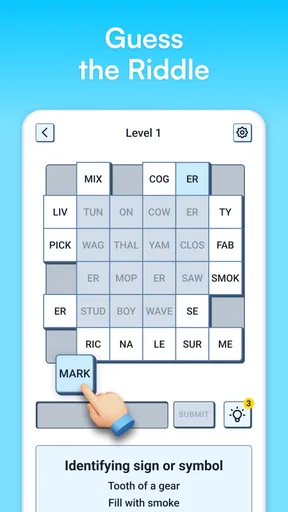
I spent time with Syllatiles as a compact word puzzle rather than treating it like a quick novelty game, and that distinction matters. Its central appeal is the way it asks me to turn limited letter pieces into words while also thinking through a small logic problem. It is easy to begin, but the better experience comes from slowing down, testing possibilities, and learning how the pieces are likely to fit together.
That makes it a good choice for short breaks, quiet evening play, or anyone who enjoys word games that require more than simply spotting a familiar word. It is a free game from Hitapps Games in the word category, rated for Everyone, and it runs on Android 8.0 or later. The current release is version 2.0.0, so it is aimed at a broad range of compatible phones rather than only recent devices.
The store summary describes a game built around logic riddles and word creation, but my impression is more specific: the fun is in managing uncertainty. I am rarely just asking, “What word can I make?” I am also asking which fragment is most useful, which guess would reveal the most, and whether a tempting answer actually fits the structure of the puzzle. The strongest part of Syllatiles is the small mental reset it creates between seeing a clue and committing to a solution.
How a normal puzzle session works
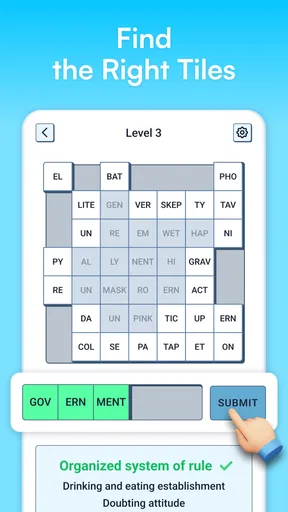
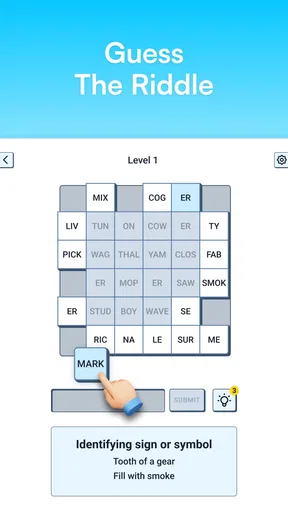
The most reliable way to approach a round is to avoid grabbing the first recognizable word. I begin by scanning every available tile or syllable and looking for common beginnings and endings. A piece that seems unhelpful on its own may become valuable when paired with a familiar suffix, while a longer-looking option can be a trap if it leaves awkward leftovers.
That opening scan is important because the game rewards arrangement, not just vocabulary. I try to identify the pieces that have several possible partners before using the ones that seem obvious. This gives me a wider set of options and reduces the chance of locking myself into a word that feels right but does not solve the whole puzzle.
When I get stuck, I change the question. Instead of searching for a complete answer immediately, I look for a likely word shape. I test whether a fragment sounds more natural at the beginning, middle, or end of a word, then build outward from there. This is quicker than staring at the entire collection and hoping a solution suddenly appears.
A practical everyday use is a short waiting period when I want something more engaging than scrolling but less demanding than a full game session. I can play one puzzle, put the phone down, and return later without needing a complicated setup. It also works well as a low-pressure activity for someone who likes vocabulary practice but does not want a formal lesson or a timed quiz.
Worth Reading Before You Choose

Flipboard Shows What News Apps Must Do Beyond the Feed

Switching to Android Auto Means Rethinking Your Driving Routine

Google Calendar Makes a Crowded Week Easier to Manage

Ludo King Makes the Most of the Minutes Between Plans

Baby Panda World Brings Quick Play to Modern Phones, but Its Game Library Feels Busy

ESPN’s Live Game View Makes Following Close Games Easier
The game is especially approachable for casual players because its basic idea is immediately understandable. You do not need to learn a large rulebook or master a complicated control scheme. The challenge comes from the language itself, which means the difficulty feels personal: a puzzle may be effortless for one player and surprisingly stubborn for another.
That personal element is also where the first limitation appears. If you prefer word games with a clear score chase, competitive ranking, or a strong sense of progression, this may feel restrained. Its satisfaction comes from solving the current arrangement rather than from building a character, collecting equipment, or competing in a detailed long-term system.
My repeatable starting routine
I found a simple routine more useful than random guessing. First, I separate the pieces mentally into likely prefixes, roots, and endings. Next, I look for combinations that produce natural pronunciation rather than merely a string of letters. Finally, I keep one or two alternatives open until the remaining pieces confirm the direction.
This habit has a hidden benefit: it prevents one attractive word from taking over the entire solve. In many word puzzles, the first familiar answer is often the source of wasted time. Here, I get better results when I treat it as a candidate instead of a conclusion.
I also recommend reading the available fragments aloud, even quietly. Syllable-based pieces can be easier to recognize through sound than through shape on the screen. This is a particularly useful approach when several options look visually similar or when the solution is a word I know by pronunciation more readily than by spelling.
Another useful habit is to reserve the most flexible piece until late in the puzzle. A fragment that can connect to multiple possibilities is more valuable as a final bridge than as an early commitment. This is not a special feature or an exploit; it is simply a way to make the puzzle’s limited information work in your favor.
Settings and play habits worth checking
Before settling into longer sessions, I would check the available in-game settings on the device. The useful questions are practical: can the sound be adjusted or muted, are notifications distracting, and does the game remain comfortable in the phone’s current display configuration? I do not treat these as cosmetic details because word puzzles depend on concentration more than spectacle.
A quiet setting is preferable when I am solving in a library, on public transport, or beside someone who is sleeping. Conversely, a small amount of feedback can make the game feel more responsive during a relaxed session. I would adjust this to the environment rather than leaving every option at its default.
Display comfort matters too. If the tiles or text feel cramped, increasing system text size may help, although that can change how much of the puzzle fits on screen. I prefer a setting that lets me see the complete arrangement without repeatedly shifting my attention. The best configuration is the one that keeps the pieces readable while preserving the overall layout.
Because this is a free game, I would also pay attention to any purchase prompts during normal use. In-app purchases range from $2.49 to $79.99 per item, so a family device should have purchase controls configured before handing it to a child. The Everyone rating makes it broadly accessible, but age suitability and spending control are separate questions.
I would not install it expecting a subscription-style word-learning course. It is better understood as a puzzle game that happens to exercise vocabulary and pattern recognition. That distinction helps set the right expectations: it can sharpen attention to word construction, but it is not a replacement for a dictionary, structured language study, or a classroom exercise.
For players who dislike interruptions, the best workflow is to use it in deliberate bursts. I play when I can give a puzzle a few focused minutes rather than opening it repeatedly while multitasking. The game is simple enough to start casually, but solving quality improves when I stop switching between it and other apps.
Small shortcuts that improve focus
On a phone, I find it helpful to keep the device in the orientation and grip that make the whole puzzle visible. Repeatedly changing how I hold the phone adds friction and makes me overlook relationships between pieces. I also avoid tapping rapidly when I am uncertain, since deliberate moves make it easier to remember which combinations I have already tested.
If I am playing during a commute, I use a pause between puzzles rather than beginning a new one just before reaching my stop. That gives me a natural stopping point and prevents a half-solved arrangement from becoming a rushed guessing exercise. It is a small habit, but it makes the game fit real life better.
Another shortcut is to use failed attempts as information. I do not simply discard a wrong arrangement; I note which fragment became impossible afterward. That tells me more about the structure than a random new guess would. Experienced play is less about finding answers instantly and more about reducing the number of plausible arrangements.
Recognizing faster patterns without rushing
The fastest improvement comes from noticing recurring language patterns. Common endings are often more informative than common beginnings because they can confirm whether the remaining pieces have a natural destination. When I see a fragment that strongly suggests an ending, I temporarily build backward from it and check whether the opening sounds equally convincing.
I also watch for pieces that create a misleading partial word. A familiar beginning can make several arrangements appear promising, but the rest may force an unnatural result. I have learned to treat fluency as a test: if I would never say the resulting word aloud, the arrangement probably deserves another look.
One non-obvious technique is to rank fragments by flexibility rather than by familiarity. The piece I recognize fastest is not always the most useful one. A less distinctive fragment may connect to several word families, while a memorable fragment may only fit one route. Saving the flexible option gives me room to recover when the obvious path fails.
I also use a two-pass method. In the first pass, I make only mental combinations and avoid committing to a layout. In the second, I place the strongest candidate and inspect what remains. This keeps early guesses from narrowing my thinking too much and is particularly effective when several fragments can form plausible words.
When a puzzle resists me, I take a short break instead of escalating into frantic tapping. Word recognition often improves after I stop looking directly at the pieces. Returning with fresh attention can reveal a sound pattern that was invisible while I was forcing the same arrangement.
These methods make the game more satisfying, but they do not remove its dependence on vocabulary. Players with a large word bank will naturally have an advantage, while younger players or people using English as an additional language may find certain puzzles less approachable. That is not necessarily a flaw, but it affects who will enjoy the challenge most.
Who benefits most from this style of puzzle
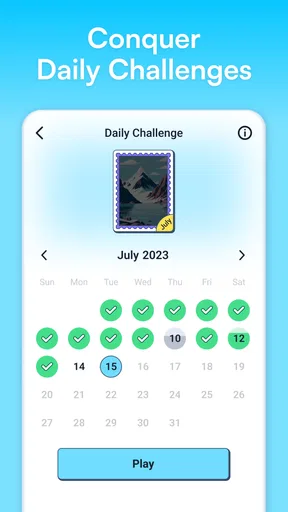
I would recommend it to people who enjoy anagrams, syllable games, and logic puzzles but want something lighter than a full daily challenge routine. It suits players who like solving privately at their own pace and who find satisfaction in discovering why a combination works.
It can also be useful for families looking for a shared vocabulary activity, provided an adult handles device purchase settings and chooses an appropriate level of assistance. A parent and child can discuss possible word parts without turning the session into a test. The game’s simple premise makes that conversation easy to start.
On the other hand, I would skip it if your priority is a large social community, head-to-head competition, elaborate rewards, or a story-driven campaign. A traditional crossword may be better when you want rich clues and broad general knowledge. A conventional anagram game may suit you more if you prefer rapid rounds and a visible score. Syllatiles occupies the middle ground: more thoughtful than a reflex word game, but more compact than a full puzzle book.
Where the challenge reaches its limits
The same compact design that makes the game accessible can eventually make it feel repetitive for dedicated word-game players. Once I became comfortable with the basic construction logic, the main source of variety was the vocabulary itself. Players seeking increasingly complex rules or layered puzzle mechanics may want a more demanding alternative alongside it.
There is also a trade-off between accessibility and precision. A simple interface is welcoming, but it may not provide the detailed controls that expert puzzle players expect from a specialist word tool. If you want extensive filtering, custom puzzle creation, deep statistics, or a carefully organized study system, this is not the app I would choose first.
The free-to-play model deserves a realistic look as well. The game costs nothing to start, which lowers the barrier for casual use, but the listed purchase range means families should not assume that every part of the experience is financially neutral. I would review purchase controls before regular use on a shared phone, especially when a child may be playing independently.
Device compatibility is reasonably broad because Android 8.0 is the minimum operating system, yet owners of older phones should still judge the experience by readability and responsiveness on their particular device. Word games are visually simple, but a small screen, aggressive display scaling, or an uncomfortable touch layout can make a careful puzzle feel unnecessarily awkward.
The Everyone rating is another reason it works for a wide audience, but it should not be confused with universal appeal. A player who dislikes language-based uncertainty may find the game frustrating even though the content itself is family-friendly. The right question is not only whether someone can access it, but whether they enjoy solving through words rather than through numbers, pictures, or action.
One of my biggest practical cautions is not to confuse speed with skill. Rushing may feel productive, but it often causes me to overlook a better arrangement. The game rewards a calm process, so it is less suitable for a player who wants constant stimulation or immediate feedback from every tap.
What I would want before recommending it
Before suggesting it to a friend, I would ask what they expect from a word game. If they want a pocket puzzle for occasional concentration, I think it is a strong match. If they want a serious vocabulary curriculum, a competitive ladder, or endless customization, I would point them toward a more specialized option.
I would also mention that the game is most enjoyable when played with a repeatable method. Opening it without a plan is fine for the first few rounds, but experienced users gain more by scanning for word families, protecting flexible fragments, and using failed arrangements as clues. Those habits turn a collection of guesses into a small logic exercise.
The developer is Hitapps Games, and the game has reached over 500 thousand installs with an average rating of 4.4 from around 9.7 thousand ratings. That level of adoption suggests it has found an audience beyond a tiny experiment, while the rating indicates generally positive reception without implying that every player will share the same preference for its measured pace.
I would not use the rating as a substitute for trying the game yourself. Word puzzles are unusually subjective: the exact balance between familiar vocabulary and tricky construction determines whether a session feels relaxing or irritating. The free starting price makes that trial relatively easy, but I would still keep the purchase range in mind before allowing unrestricted access on a shared device.
My verdict after building a routine
After using the game with a more deliberate workflow, I see its appeal clearly. It is not trying to be a massive word platform. Instead, it offers compact arrangements that ask me to recognize patterns, test language, and make careful choices. That focus is its strength, especially when I want a quiet activity that occupies my attention without demanding a long commitment.
Syllatiles is at its best when you treat each puzzle as a small investigation rather than a race. Scan first, listen for natural syllable combinations, keep flexible pieces available, and use mistakes to narrow the possibilities. Those techniques make the experience feel deeper than the short store description suggests, while remaining simple enough for a casual player to understand.
It is not the right choice for everyone. Competitive players may want rankings, crossword fans may prefer richer clues, and serious language learners will need tools with structured teaching features. The purchase model also deserves attention in family settings, and the compact format may eventually feel limited to people who want increasingly elaborate mechanics.
For me, though, the balance is appealing. The game is free, family-friendly, compatible with Android 8.0 or later, and easy to fit into a spare moment. Its current version, 2.0.0, gives it a straightforward modern starting point, while the core word-building challenge remains the reason to return. I would recommend it to a friend who enjoys calm, language-focused puzzles and is happy to trade flashy progression for the satisfaction of finding the arrangement that finally makes sense.
Pros
- Simple tile-based wordplay is easy to learn and enjoyable in short sessions.
- Clean interface keeps the focus on solving puzzles rather than menus or distractions.
- Gradual difficulty provides a manageable challenge for casual and regular players.
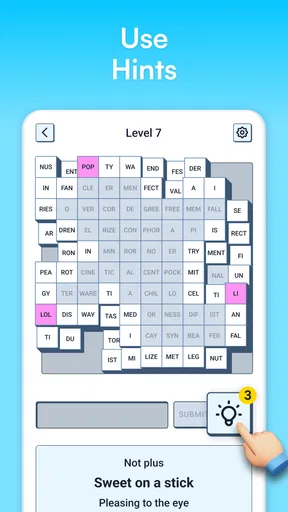
- Helpful hints can assist when you are stuck without immediately revealing the answer.
- Works well as a relaxing vocabulary exercise during commutes or brief breaks.
Cons
- Some puzzles may feel repetitive once you become familiar with the core mechanics.
- Limited word knowledge can make certain levels frustrating without using hints.
- Progress may depend on advertisements or optional purchases
- depending on the version.
- The game offers less appeal for players who prefer fast action or competitive modes.
- Small tile layouts may be difficult to use comfortably on compact phone screens.
FAQs for Syllatiles - Word Puzzle Game
What is Syllatiles - Word Puzzle Game?
Syllatiles is a word puzzle game based on arranging syllable tiles to form complete words. Instead of simply matching letters, you must recognize word parts, place them in the correct order, and solve each challenge logically. The format makes it suitable for players who enjoy vocabulary games, spelling practice, and short brain-training sessions with progressively more demanding puzzles.
How do you play Syllatiles?
Gameplay generally involves selecting, moving, or arranging tiles that represent syllables until they create a valid word. You need to examine the available combinations carefully because some pieces may look as though they fit in several positions. Solving a level depends on understanding pronunciation, spelling, and word structure rather than relying only on quick guesses or random tile placement.
Is Syllatiles suitable for beginners and children?
Syllatiles can be approachable for beginners because its central idea is easy to understand: combine syllables into words. However, the difficulty may increase as vocabulary becomes less familiar or the tile arrangements become more challenging. It can also be useful for children and language learners, although younger players may benefit from supervision, especially when puzzles include advanced words or unfamiliar pronunciations.
Can Syllatiles be played offline?
Whether Syllatiles works fully offline depends on the version installed and how its puzzles, advertisements, and optional features are delivered. Basic gameplay may be available without a constant connection, but some functions could require internet access for updates, analytics, advertisements, cloud features, or in-app purchases. It is best to check the app-store listing and test the game after temporarily disabling connectivity.
Does Syllatiles contain ads or in-app purchases?
The availability of advertisements and optional purchases can vary according to the platform, region, and current version of Syllatiles. Free puzzle games commonly use ads to support development, while purchases may remove advertising or provide hints and other conveniences. Before downloading, review the store page for pricing details and check the permissions and purchase settings if the game will be used by children.


